THE COMPLETE HISTORY OF LSD
From Bicycle Day to the Psychedelic Revolution
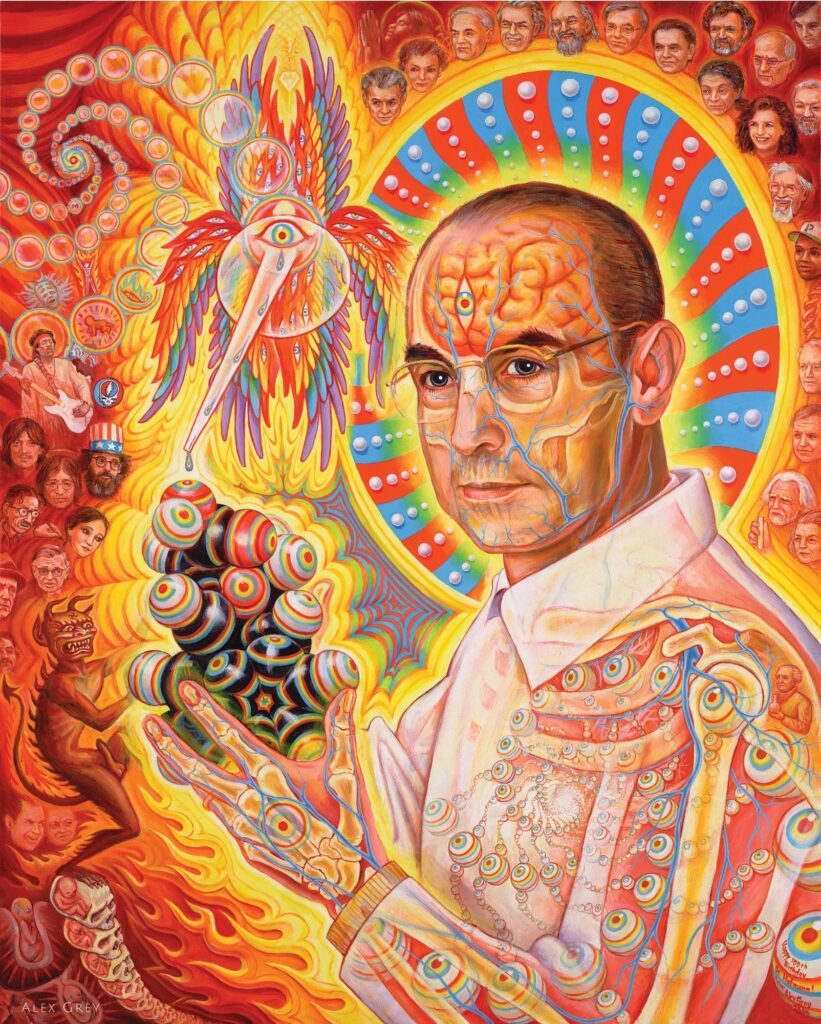
One molecule. One bicycle. And a whole lot of people questioning reality.
Imagine discovering a chemical compound, leaving it on a laboratory shelf for five years, and then accidentally stumbling upon one of the most extraordinary psychoactive substances known to science.
Sounds like the plot of a slightly ridiculous science-fiction movie? Nope. That’s basically the story of Albert Hofmann and LSD. And things only get weirder.
We’re talking Swiss chemists, secret CIA experiments, underground laboratories, psychedelic rock bands, hippies, government crackdowns, and one very famous bicycle ride. All because of a tiny molecule called lysergic acid diethylamide. Better known as LSD. Or simply acid.
So grab your imaginary bicycle helmet. We’re going back to where it all began.
1938: The Fungus That Started Everything
Our story begins in Basel, Switzerland. The year is 1938. Europe is heading toward catastrophe, and a young Swiss scientist named Albert Hofmann is working for Sandoz. His mission? Investigate compounds derived from ergot, a fungus that grows on rye and other grains.
Yes. A fungus. Again. Apparently, fungi have been running a secret chemistry department for millions of years.
Ergot is associated with Claviceps purpurea, which produces ergot alkaloids. Contaminated grain historically caused ergotism, sometimes called St. Anthony’s Fire—a name that sounds like a heavy-metal band but referred to a serious medical problem.
Ergot alkaloids also attracted pharmaceutical interest because some influence blood vessels and smooth muscle. Researchers investigated possible medical applications. Enter Hofmann.
The 25th Experiment
Hofmann synthesized lysergic acid diethylamide, designated LSD-25: the twenty-fifth compound in his particular research series.
Not because it unlocked the twenty-fifth chakra. Not because there were twenty-five dimensions. Just chemistry.
The early tests did not suggest an especially promising pharmaceutical application. So the molecule was put aside for five years, like a mysterious movie character waiting for Act Two.
1943: The Accidental Discovery
On April 16, 1943, Hofmann revisited LSD-25 and experienced unusual sensations while working with it: dizziness and vivid imagery. He suspected accidental exposure, although the exact route of exposure remains uncertain. The popular skin-absorption story is not an established fact.
A scientist encountering an inexplicable phenomenon might say, “Interesting. I should investigate this further.” Three days later, Hofmann did exactly that.
April 19, 1943: Bicycle Day
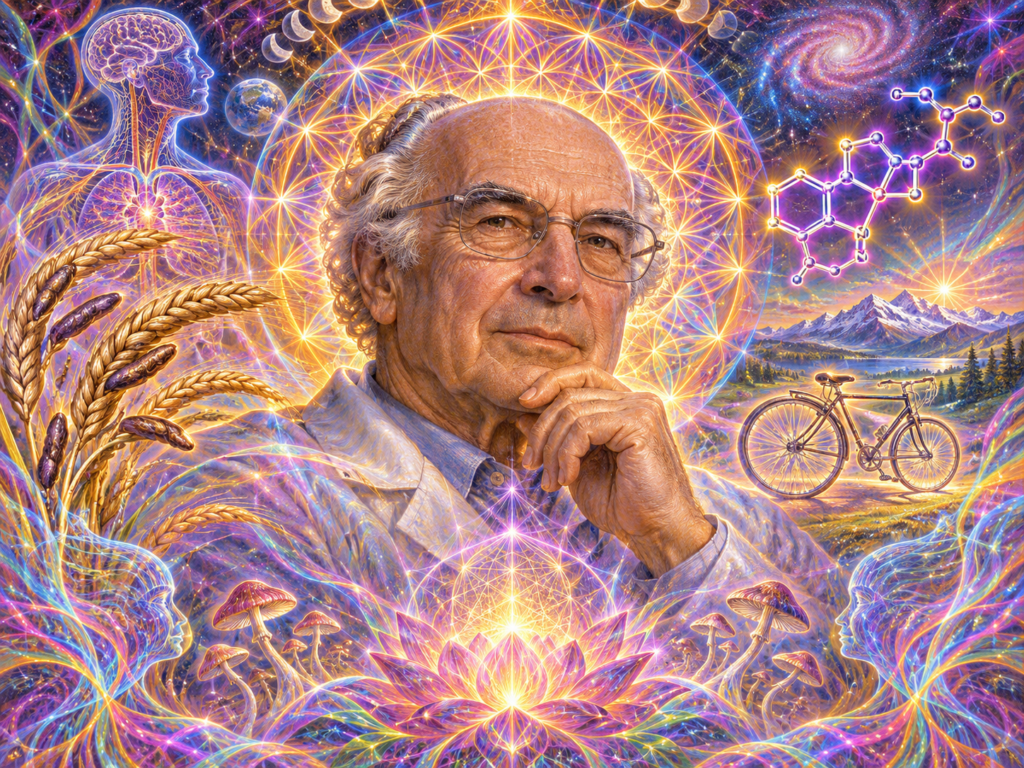
On April 19, Hofmann conducted a deliberate self-experiment with LSD. His chosen quantity reflected the assumptions of the time, which seriously underestimated the compound’s potency.
As his perception changed and anxiety grew, he asked his assistant to accompany him home. With wartime restrictions limiting automobile use, they travelled by bicycle.
Hofmann described distortions of familiar objects, movement, and distance. Once home, the intense experience continued before he eventually recovered.
And so a bicycle became one of chemistry’s least-expected historical icons. Every April 19, people commemorate Bicycle Day. Rainbows and bicycles now share a surprisingly close cultural relationship.
The 1940s and 1950s: A Pharmaceutical Research Tool
Before hippies, psychedelic rock, and kaleidoscopic blotter art, LSD was studied by psychiatrists and psychologists. Sandoz distributed it to qualified investigators under the trade name Delysid.
Yes, LSD once had pharmaceutical branding. And no, the packaging was not a dancing mushroom in sunglasses.
Researchers investigated psychotherapy, alcoholism, and the study of unusual mental states. Some researchers were optimistic, but the early studies used inconsistent methods and often lacked adequate control groups. Promising anecdotes were not the same as reliable clinical evidence.
Still, this period established LSD as a serious scientific question.
The 1950s: The CIA Enters the Chat
While clinicians were investigating LSD, the CIA explored it in a very different context. Project MKULTRA, launched in 1953, involved efforts to study behavioral influence, interrogation, and psychoactive substances.
Some experiments took place without informed consent and involved serious ethical abuses. Congressional inquiries exposed aspects of the program in the 1970s. Many records were destroyed, leaving gaps in the history.
Scientific curiosity never excuses experimenting on people without consent. And adding “research” to a project doesn’t magically make it ethical. Nice try, CIA.
The 1960s: Chemistry Meets Counterculture
Civil-rights movements, political protest, experimental music, and rapidly changing social values shaped the 1960s. LSD became one of the most recognizable symbols of a much wider counterculture.
Harvard psychologist Timothy Leary and collaborators studied psychedelics, especially psilocybin, before Leary became a controversial advocate of psychedelic experiences. His slogan “Turn on, tune in, drop out” was not exactly the university’s preferred course description.
Writer Ken Kesey and the Merry Pranksters travelled in their colorfully painted bus, Furthur, and organized experimental gatherings called Acid Tests. Music, projections, theatre, and social experimentation collided with the emerging San Francisco scene. The Grateful Dead became closely connected to this world.
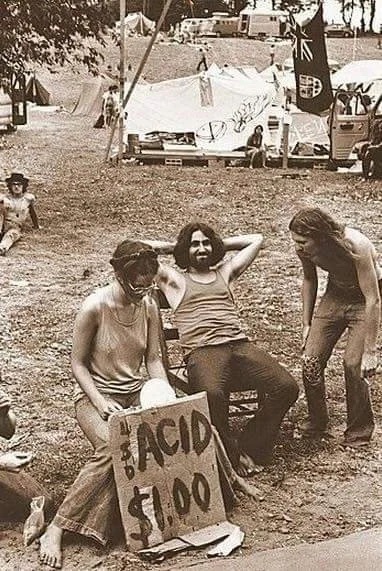
Orange Sunshine: Underground Acid Becomes Legend
“Orange Sunshine” became a legendary name in the late-1960s underground. It is associated with the chemists Tim Scully and Nick Sand and distribution networks tied to the Brotherhood of Eternal Love.
Owsley “Bear” Stanley was another influential underground chemist and a celebrated sound engineer associated with the Grateful Dead. Apparently, legendary chemistry wasn’t enough—he also wanted concerts to sound incredible.
Orange Sunshine was a product name, not the name of a newly discovered class of molecules. Stories about its identity and alleged special properties multiplied over time, but a famous label is not a laboratory analysis.
Psychedelic mythology loves a good story. Chemistry still wants evidence.
LSD Tabs, Acid Tabs and the Rise of Blotter Art
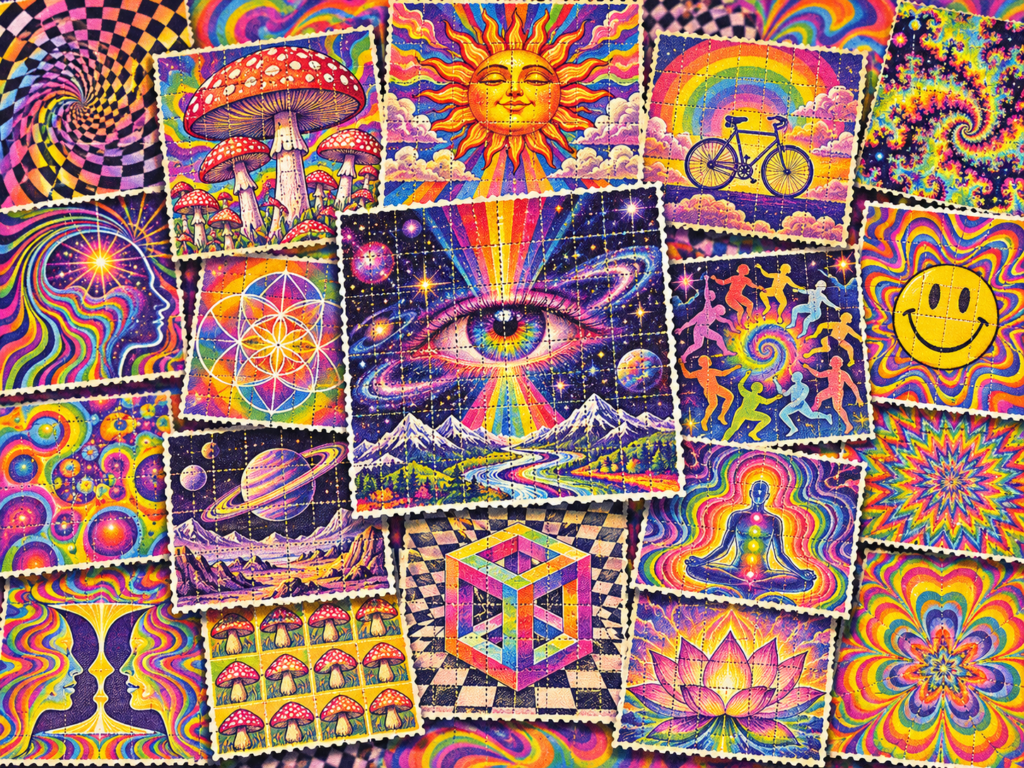
Blotter paper became one of the most recognizable symbols of acid culture. Earlier forms of LSD distribution included tablets and sugar cubes, but perforated paper gained prominence around 1970.
Over time, blotter designs turned into their own visual language: sunshine, optical illusions, cartoons, sacred geometry, surreal landscapes, and smiling faces with suspiciously excellent energy.
A tiny canvas. A gigantic cultural footprint.
Blotter art can be appreciated as collectible graphic design independently of any chemical association. And a print or logo on a tab cannot reliably establish its chemical contents.
1966–1971: Prohibition and Drug Policy
As LSD attracted increasing public attention, governments expanded restrictions. California criminalized unauthorized possession in 1966; US federal controls also tightened through the decade.
The Controlled Substances Act of 1970 established the modern federal scheduling framework and placed LSD in Schedule I. Internationally, the 1971 UN Convention on Psychotropic Substances placed LSD under Schedule I controls.
These changes made scientific study significantly more difficult, though psychedelic research did not disappear entirely. The molecule remained intriguing even when the politics became complicated.
What LSD Taught Neuroscientists
LSD is a lysergamide that interacts with several receptor systems, including serotonin receptors. Activity at the 5-HT2A receptor is especially important to its psychedelic effects.
Researchers study how its molecular interactions relate to changes in perception and brain-network communication. But “one receptor equals one experience” is not how consciousness works.
The brain has roughly a billion settings and no user manual. Neuroscientists are still trying to find the preferences menu.
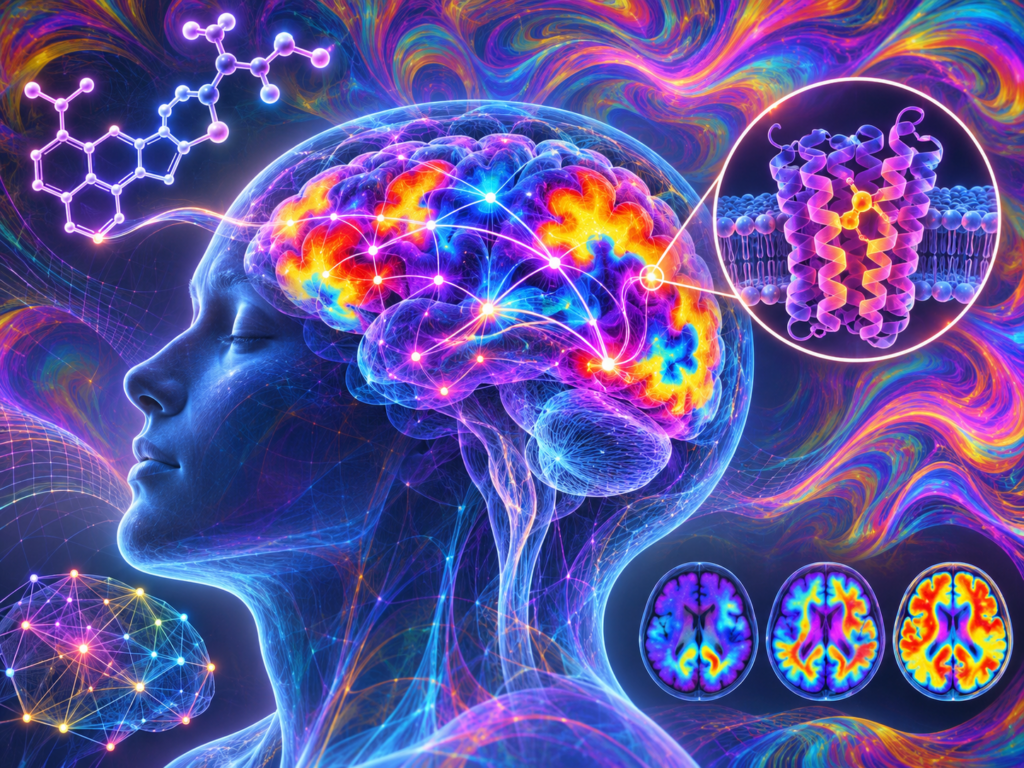
LSD Derivatives: The Lysergamide Family Expands
The chemistry story did not stop with LSD-25. Related lysergamides include ALD-52, AL-LAD, ETH-LAD, 1P-LSD, 1cP-LSD, 1B-LSD, 1BP-LSD, and 1FE-LSD.
Some have been investigated for decades; newer compounds have much more limited published evidence. Scientists have explored whether certain N1-substituted derivatives undergo metabolic conversion to LSD. Evidence for one analogue cannot automatically be applied to another.
Likewise, “research chemical” is not a legal status. Rules differ by compound, jurisdiction, and intended activity. The phrase “legal psychedelics” deserves careful legal verification, not just a catchy headline.
The Psychedelic Renaissance: Research Returns
Modern researchers have returned to LSD with controlled studies exploring anxiety, perception, receptor pharmacology, and brain connectivity.
A randomized phase 2b trial published in JAMA in September 2025 examined MM120, a pharmaceutical LSD formulation, in adults with generalized anxiety disorder. The findings supported further investigation, not a blanket claim that LSD is approved or appropriate for everyone.
Modern research uses contemporary clinical methods and ethical oversight. Promising results are exciting, but science still needs replication, long-term follow-up, and careful assessment of risks.
Risks, Myths and Reality
LSD history is full of extremes: miracle-cure claims on one side and supernatural horror stories on the other. Neither is a substitute for reliable evidence.
LSD can cause intense perceptual changes, anxiety, panic, confusion, impaired judgment, and temporary cardiovascular effects. Some people experience prolonged psychological or perceptual problems, and individual vulnerabilities matter.
Claims that LSD automatically rewires the brain or makes everyone more creative go beyond established evidence. If a molecule guaranteed artistic genius, every chemistry lab would have a Grammy collection.
LSD’s Cultural Legacy
From music and fashion to typography, film, philosophy, and festival art, LSD’s history intersects with much of twentieth-century culture.
Of course, not every rainbow poster or experimental guitar solo can be attributed to a drug. Counterculture had many causes. But LSD became one of its defining symbols—and its visual language remains unmistakable.
Frequently Asked Questions
Who invented LSD?
Albert Hofmann first synthesized LSD in 1938 while working at Sandoz in Basel.
What does LSD-25 mean?
It refers to the twenty-fifth compound in Hofmann’s research series of lysergic acid derivatives.
When was Bicycle Day?
April 19, commemorating Hofmann’s self-experiment and bicycle journey in 1943.
Why is LSD called acid?
“Acid” is a slang shorthand drawn from lysergic acid diethylamide.
What was Orange Sunshine?
A historically famous underground LSD product name associated with Scully, Sand, and the Brotherhood of Eternal Love.
What are LSD tabs?
Small pieces of blotter paper historically associated with LSD distribution; artwork cannot verify chemical contents.
When was LSD prohibited?
Restrictions varied by location; the US Controlled Substances Act of 1970 and the UN Convention of 1971 were major milestones.
Is LSD still researched?
Yes, in controlled pharmacological and clinical studies, but research findings do not imply general medical approval.
Final Thoughts: One Molecule, a Thousand Stories
In 1938, a Swiss chemist synthesized a molecule derived from research on a fungus. Five years later, he discovered its remarkable effects. The resulting story has touched science, art, politics, psychiatry, and counterculture.
Governments tried to control it. Scientists tried to understand it. Artists tried to express it. Philosophers tried to explain it. And somewhere along the way, a bicycle became an icon.
The questions remain bigger than the molecule: How does the brain construct reality? What is consciousness? How much do we know about ourselves?
Stay curious. Question reality. Keep your mind open—and your facts straight.
FairLSD — Ancient Wisdom. Modern Science. Wonderfully Weird.
Scientific References & Further Reading
Albert Hofmann, The Discovery of LSD (1970), historical first-person account.
Passie et al., The Pharmacology of Lysergic Acid Diethylamide, CNS Neuroscience & Therapeutics (2008), DOI: 10.1111/j.1755-5949.2008.00059.x.
Bonson, Regulation of Human Research with LSD in the United States (1949–1987), Psychopharmacology (2018), DOI: 10.1007/s00213-017-4777-4.
US Senate, Project MKULTRA hearings (1977).
Brandt et al., Return of the Lysergamides: 1P-LSD, Drug Testing and Analysis (2016), DOI: 10.1002/dta.1884.
Grumann et al., Pharmacokinetics and Subjective Effects of 1P-LSD in Humans, Drug Testing and Analysis (2020), DOI: 10.1002/dta.2821.
Robison et al., MM120 (Lysergide) in Generalized Anxiety Disorder, JAMA (2025), DOI: 10.1001/jama.2025.13481.
Educational disclaimer: Historical and scientific information only. Not medical advice, instructions for substance use, or a determination of legal status.